ChannelsAugust 3, 2026
Send inbound email to AWS SQS (no HTTP endpoint in the middle)
Most inbound email services deliver to an HTTP endpoint you have to build and keep running. This routes the parsed message straight into SQS instead.
Read guide

Guides
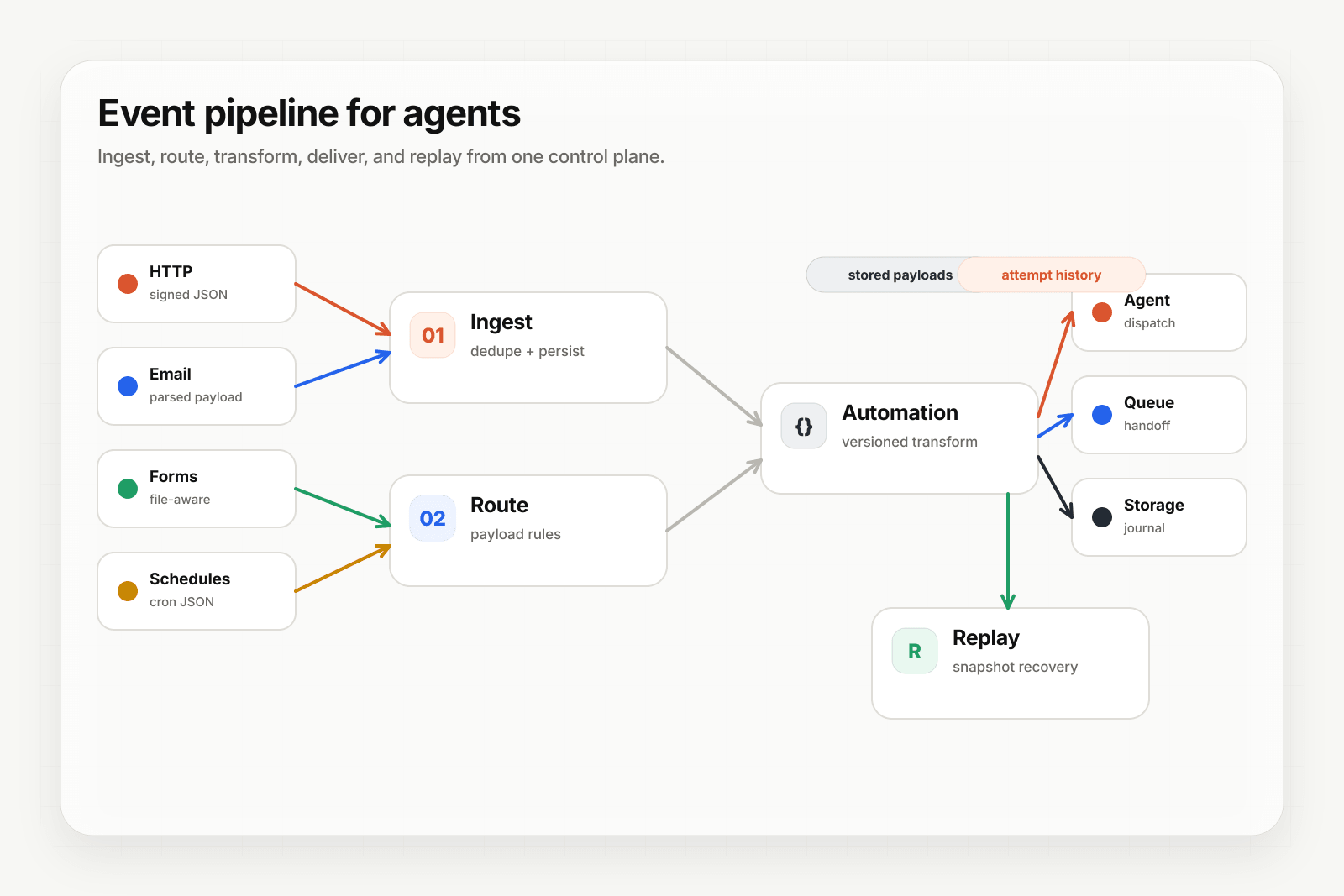
Start with a blueprint, wire up a channel, route to the right agent, recover when things break. These are the patterns we recommend.
Most inbound email services deliver to an HTTP endpoint you have to build and keep running. This routes the parsed message straight into SQS instead.
Form backends normally forward to an inbox or a webhook. If what you actually want is a durable record in a bucket, this removes the service in between.
Inbound email services retry for a few hours and then drop the message, usually without telling you. This is what recovery looks like when the email is a delivery instead.
An empty allowlist means any sender who knows the address can trigger your webhook. Here is how to close that, and what the failure modes look like when you do.
Without a payload template every scheduled firing looks identical to the consumer. With one, a single webhook can carry a whole set of distinct jobs.
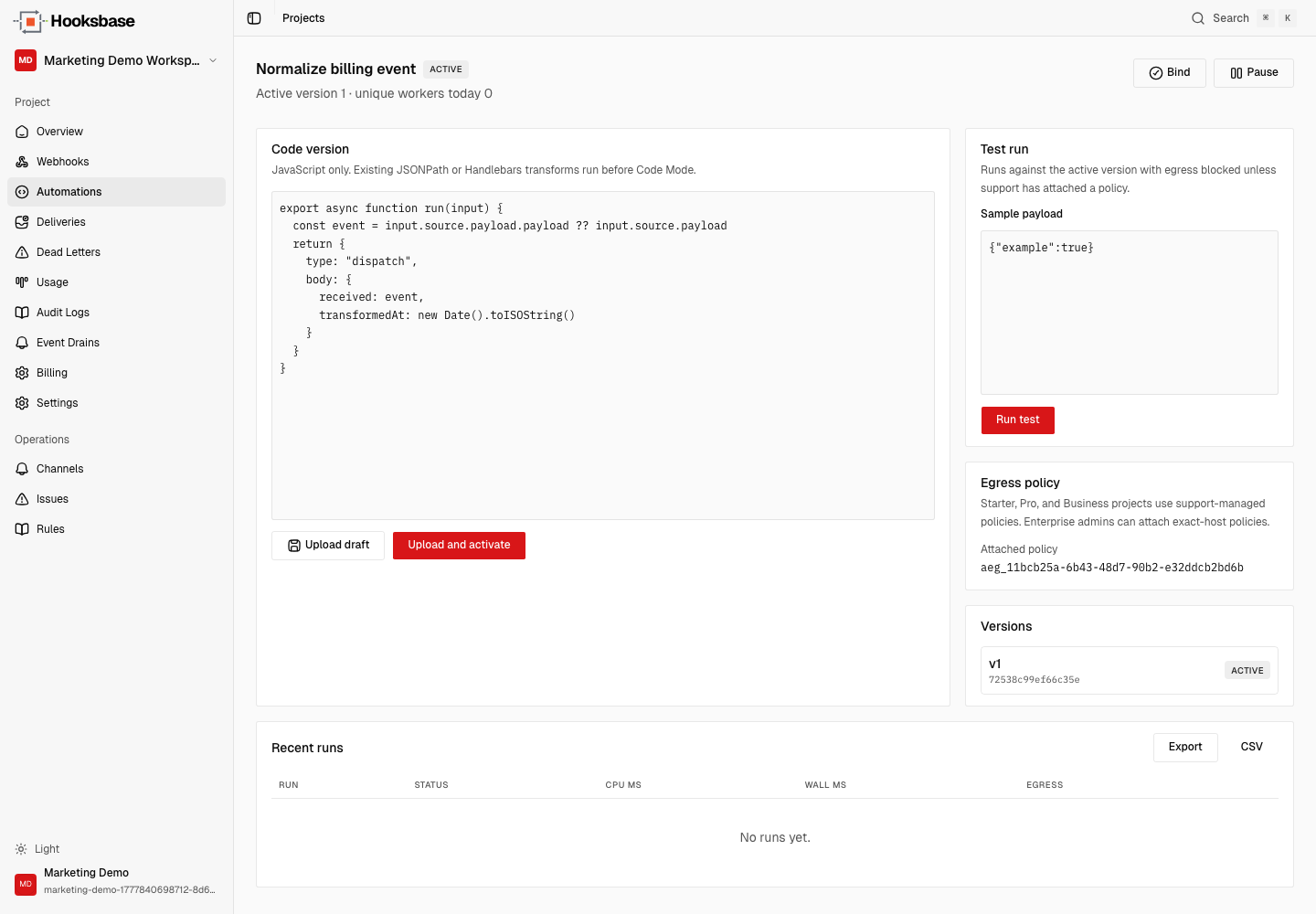
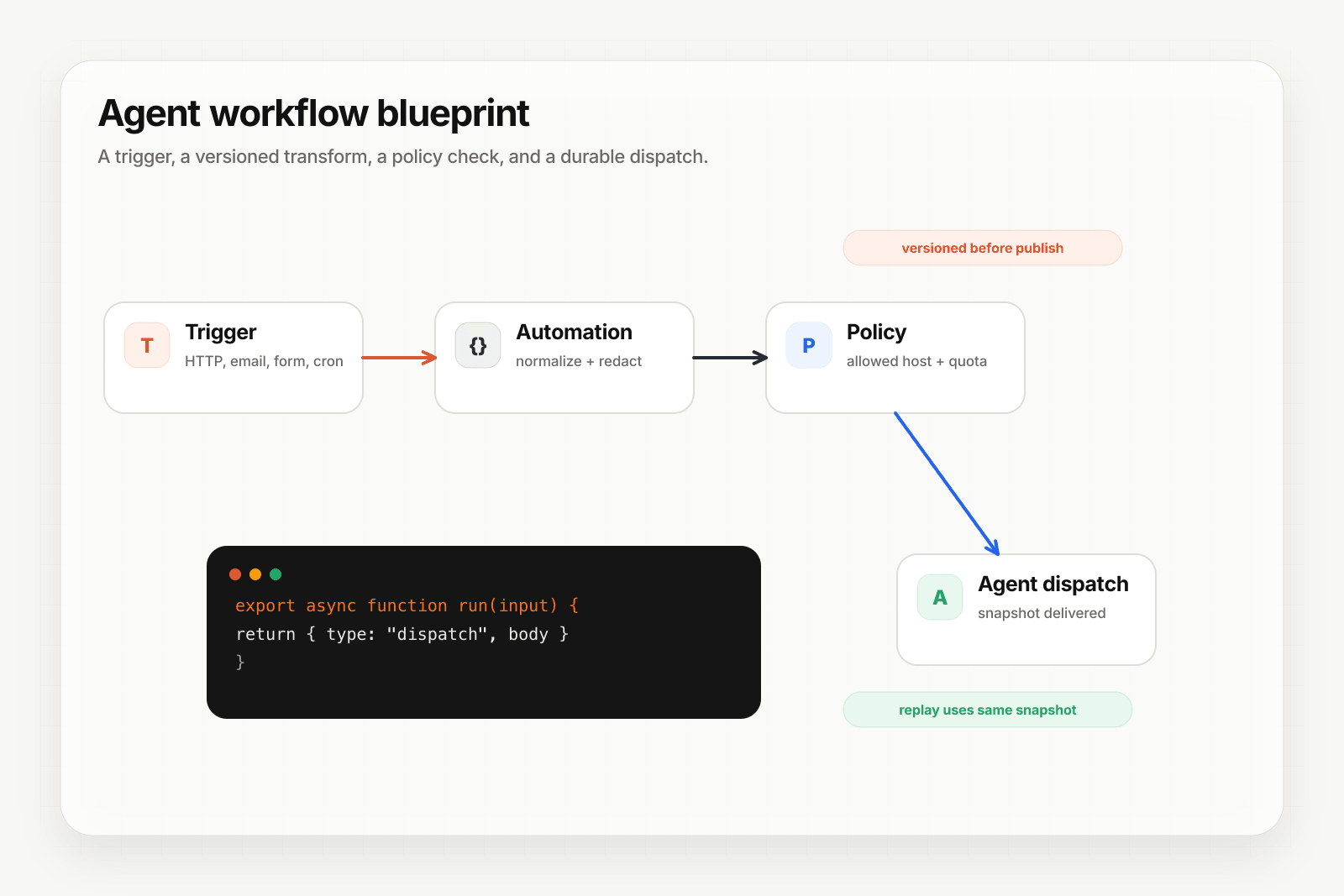
Put versioned event-shaping logic in Hooksbase so your agent receives clean inputs and replay stays deterministic.
AI agents in 2026 cluster around a few proven shapes — support triage, payment recovery, release automation, lead enrichment, monitoring. Here are real examples of each, with the event triggers behind them and what their event layer needs to look like.
Twilio webhooks fire on inbound SMS, voice events, and message status updates — and they behave differently from most other providers (form-urlencoded payloads, no automatic retry on messaging failures, fallback URLs instead). Here is how to receive them reliably.
Clerk webhooks fire on user signup, profile updates, session events, and email events — perfect triggers for onboarding, enrichment, and lifecycle agents. Here is how to receive them reliably.
Notion webhooks fire on page edits, database changes, and comments — perfect triggers for sync agents and AI workflows. Here is how to receive them reliably, including the one-time verification handshake.
Plaid webhooks notify your app about new transactions, item state changes, and errors — and they verify signatures using JWTs with rotating keys, which is more involved than HMAC. Here is how to receive them reliably.
Jira webhooks fire on issue, comment, sprint, and worklog events. There are two flavors with very different security models — admin-configured webhooks have no signature, Connect-app webhooks use JWT. Here is how to receive each reliably.
Resend webhooks fire across the full email lifecycle — sent, delivered, opened, clicked, bounced, complained. Here is how to receive them reliably and turn them into actionable signals for your agents.
Polar webhooks fire on subscription, order, and customer lifecycle events — the trigger surface for billing automation, dunning, and revenue agents. Here is how to receive them reliably.
Typeform webhooks fire on every form submission — perfect triggers for lead routing, support intake, and survey-driven AI agents. Here is how to receive them reliably, including signature verification.
Mailchimp webhooks fire on subscribe, unsubscribe, profile, campaign, and email-cleaned events — and they have no native signature scheme. Here is how to receive them reliably, plus the security pattern to compensate for the missing signing.
Brevo webhooks fire on email lifecycle events — delivered, opened, clicked, bounced, marked-as-spam — across both transactional and marketing channels. Here is how to receive them reliably without a native signature scheme to lean on.
Braze webhooks are a message channel — your campaigns and Canvases POST to a URL when they fire. Here is how the channel actually works, how to authenticate inbound requests safely, and how to make ingest reliable.
Figma webhooks fire on file edits, comments, library publishes, and version updates — perfect triggers for design-system sync, comment triage, and AI agents that watch your design surface. Here is how to receive them reliably.
Receiving Zapier webhooks means receiving whatever the Zap builder configured Webhooks by Zapier to POST. Here is how the channel works, how to authenticate inbound requests, and when the more honest answer is to skip the Zap.
n8n workflows POST data to your endpoint via the HTTP Request node — and the structure of what you receive is controlled by whoever built the workflow. Here is how to receive them reliably and when to bypass n8n entirely.
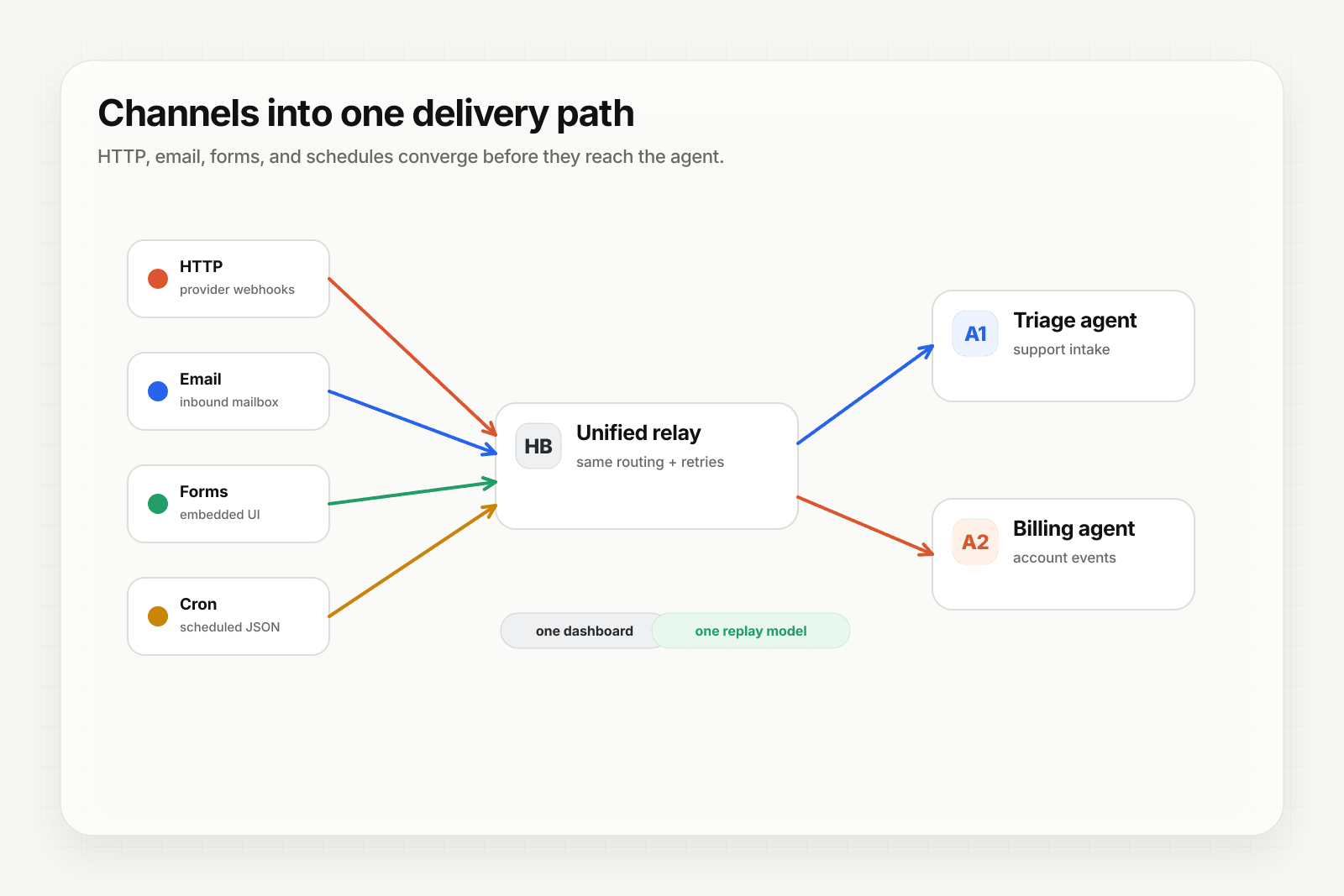
A huge slice of real-world signal arrives by email — support requests, vendor invoices, customer feedback. Email-to-webhook turns that signal into a structured trigger for your agent without you owning a mail server.
Forms are everywhere — and they're high-intent triggers for AI agents. Form-to-webhook handles the multipart parsing, file storage, CORS, and delivery so your agent gets a clean structured event.
Building an AI agent is now straightforward — until it needs to react to real events from the world. Here's how to build one end-to-end, with the event layer that keeps it reliable in production.
Stripe webhooks are easy to receive and hard to receive *reliably*. Here's the full path: signature verification, retries, idempotency, replay, and the failure modes that bite most teams in production.
GitHub fires webhooks for PRs, issues, releases, deployments, workflows — over thirty event types. Here's how to receive them reliably: signature verification, payload shapes, retries, and what most teams get wrong.
When people say "Slack webhook" they could mean two completely different things. Here is the inbound side (Events API) and the outbound side (Incoming Webhooks), how to verify each, and what production reliability needs.
Discord 'webhooks' don't work the way Stripe or GitHub webhooks do — they are mostly outbound. Here is the standard outbound pattern, how to make it reliable when forwarding events from many sources, and how Discord's inbound Interactions endpoints actually work.
Shopify fires webhooks for orders, products, customers, fulfillments, and dozens of other store events. Here's how to receive them reliably — including the failure mode that silently removes your subscription.
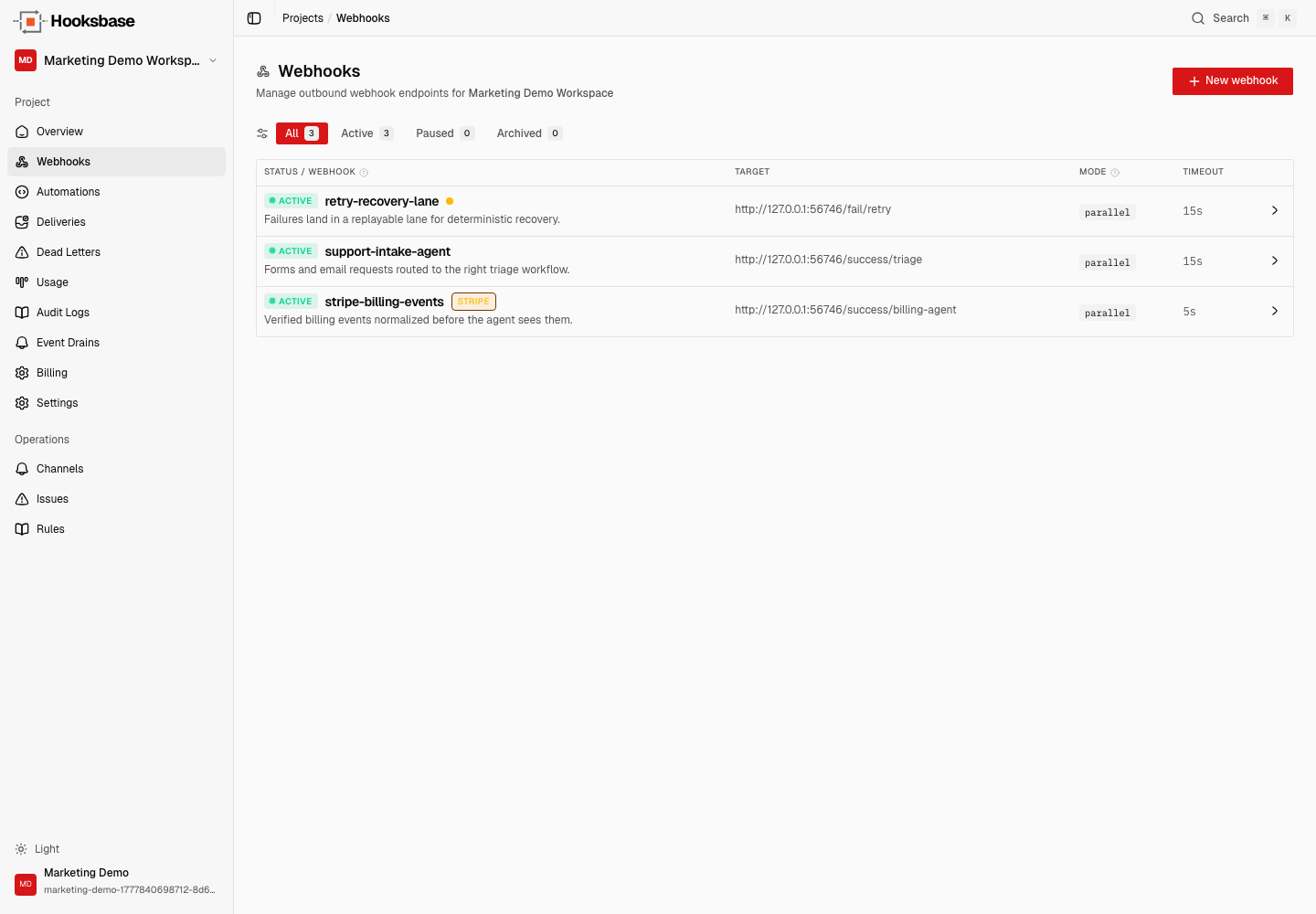
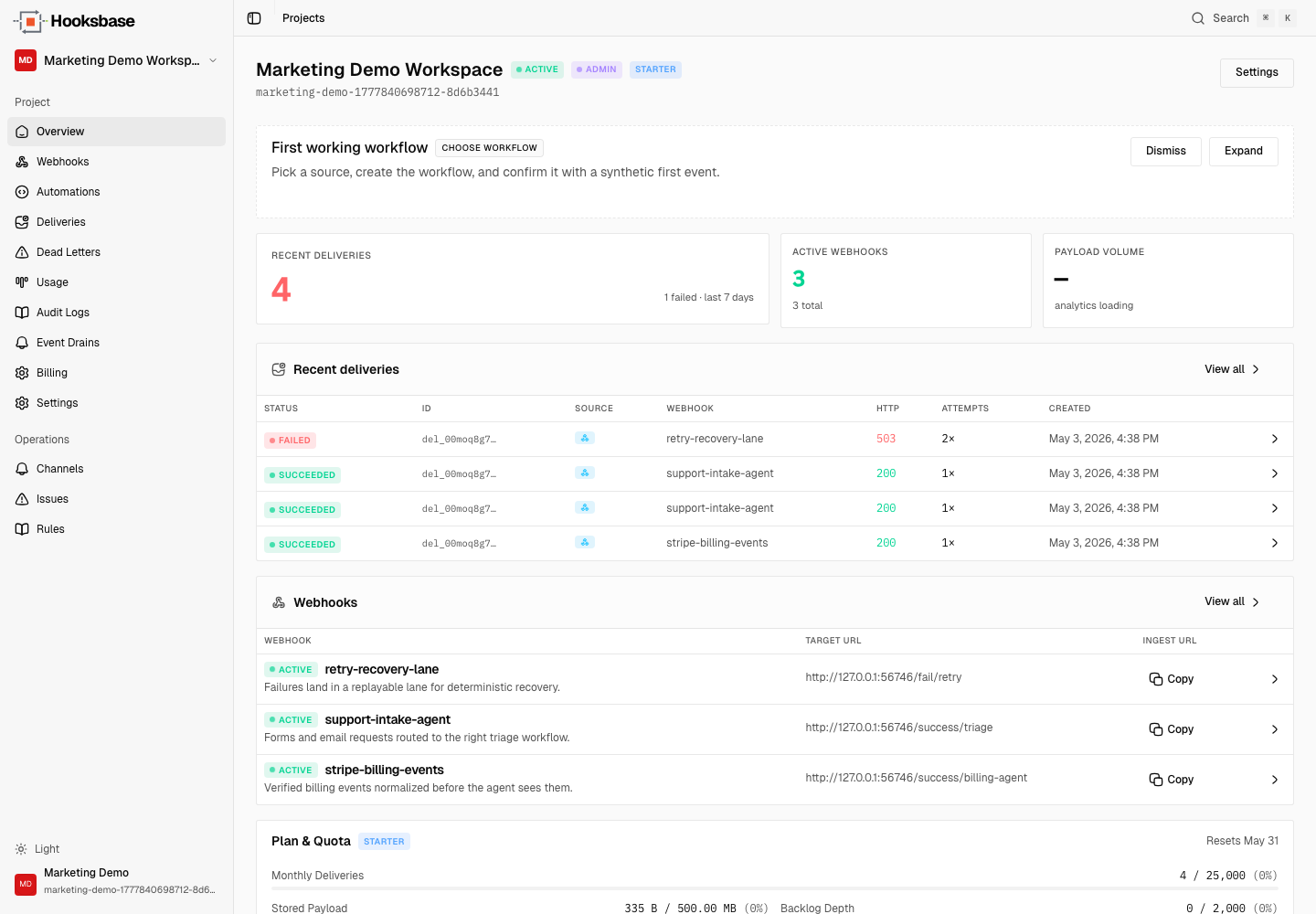
A practical path from new project to first accepted event, delivery attempt, and replay-ready history — connected to the agent you've already built.
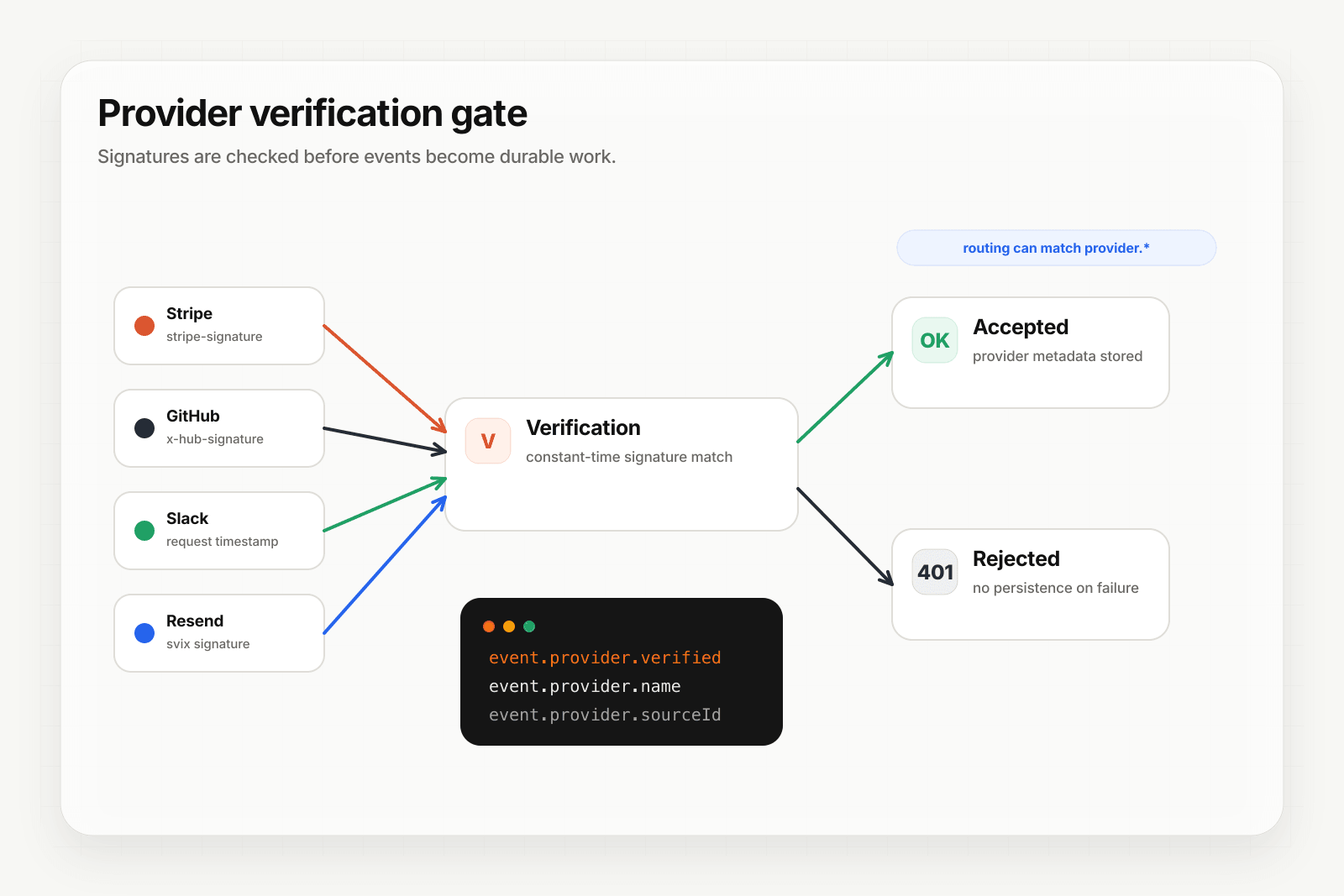
Provider packs validate raw requests after Hooksbase ingest auth and before persistence, stamp trusted metadata on the delivery, and enable provider-aware routing — so your agent never spends tokens on a forged event.
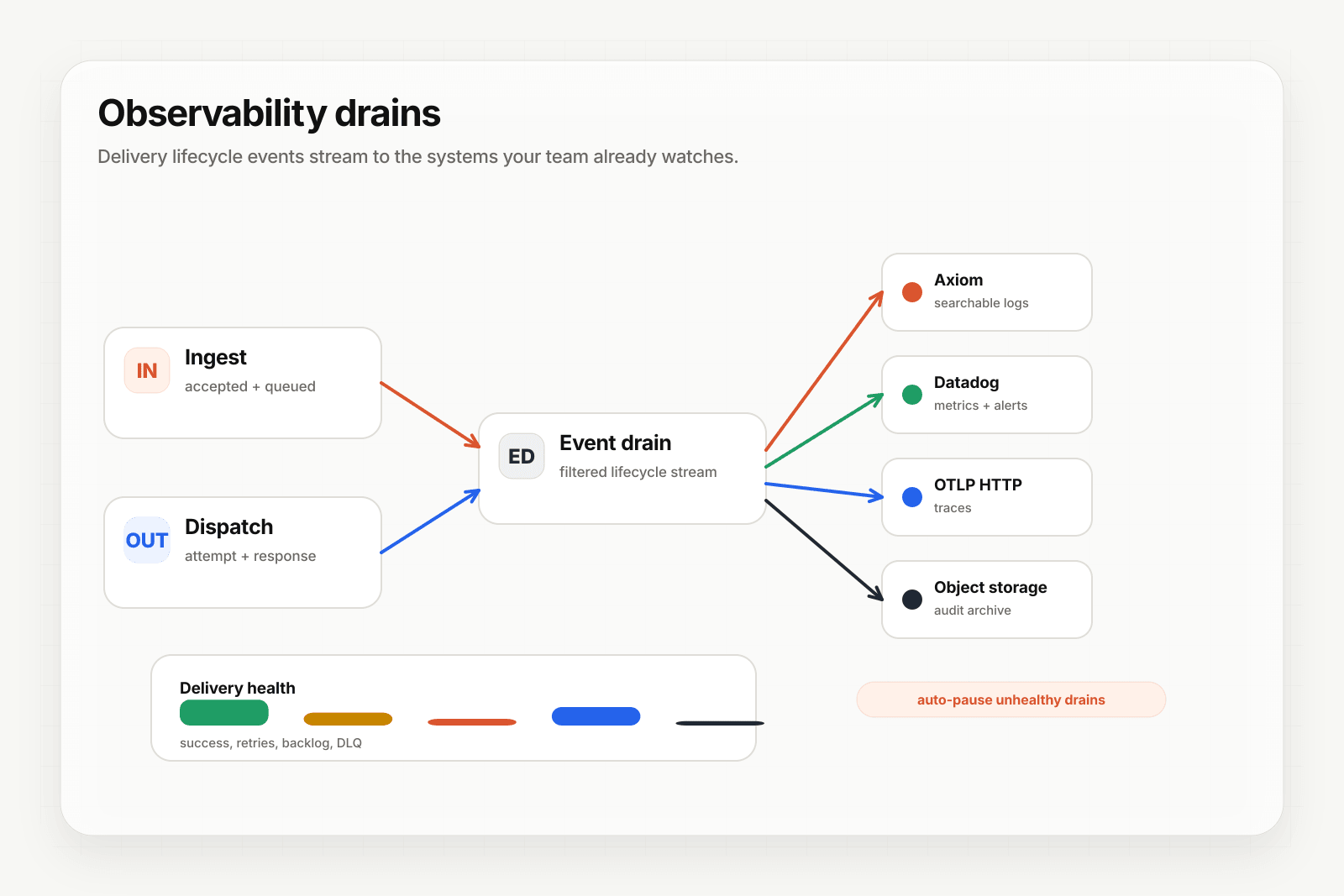
Delivery history in the Hooksbase dashboard is useful. Your on-call team works somewhere else. Event drains put agent event lifecycle alongside the rest of your production telemetry.
Pipedream is great at running developer-friendly workflows in Node.js. Hooksbase adds reliable ingest, signature verification, replay, and DLQ in front of every workflow. Here's the connection recipe.
Blueprints pick source, destination, and validation settings for common agent patterns — so you ship a validated first workflow in about ten minutes.
Zapier is great at the workflow. Webhooks by Zapier is great at HTTP triggers. Hooksbase covers everything else — signature verification, email ingest, forms, replay, DLQ — and dispatches to your Zap when ready.
Make handles the visual workflow. Hooksbase adds reliable ingest, signature verification, replay, and DLQ in front of every scenario. Here's the 10-minute connection recipe.
n8n handles the workflow logic. Hooksbase adds reliable ingest, signature verification, replay, and DLQ in front of it. Here's the 10-minute connection recipe.
Hermes gives you the agent. Hooksbase gives it reliable events, verified providers, replay, and observability. Here's the 10-minute connection recipe.
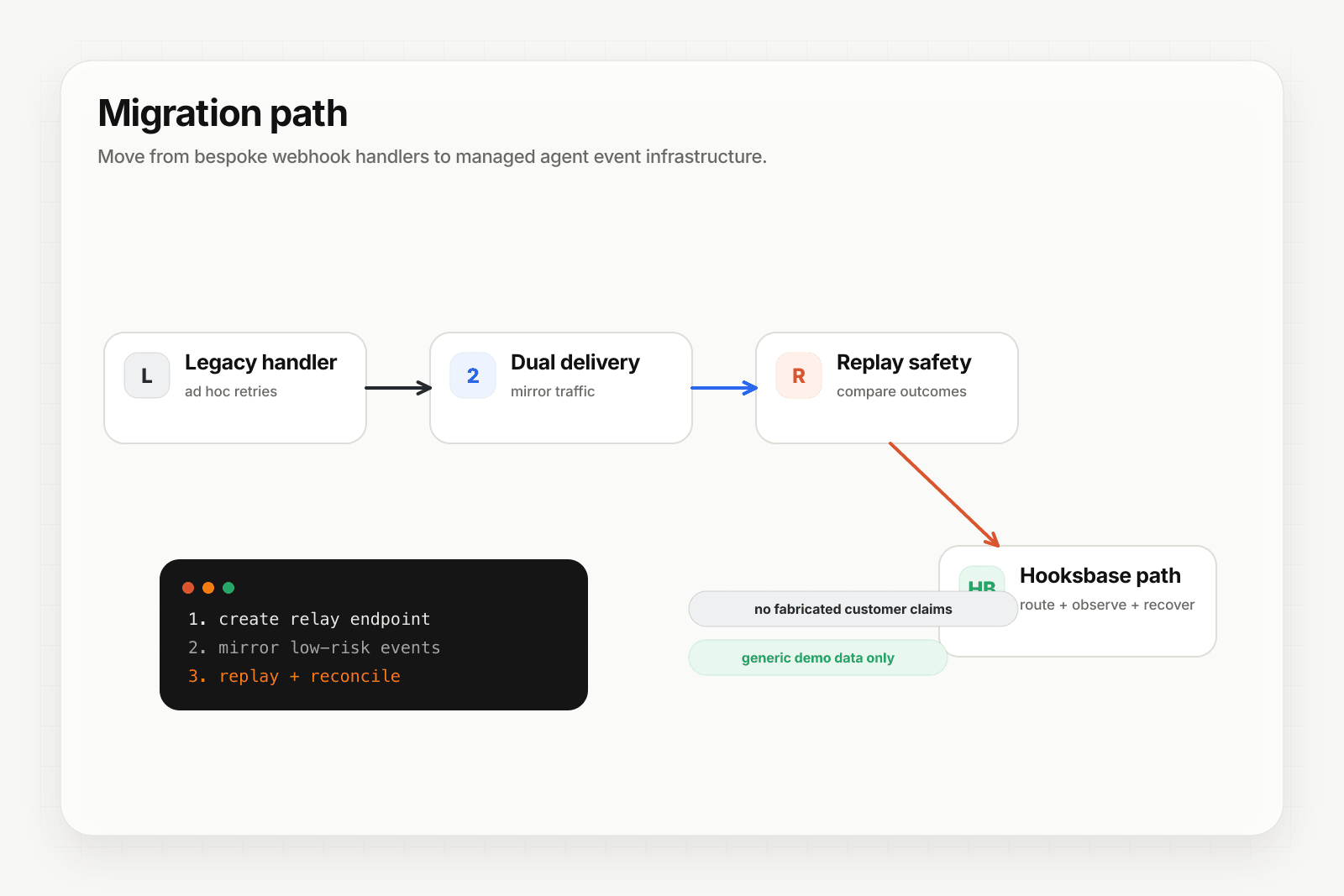
A practical migration plan from Hookdeck to Hooksbase, for teams moving to an AI-agent-oriented event layer with bundled pricing.
A practical migration plan from Svix to Hooksbase, written for teams moving their webhook stack under an AI agent.
OpenClaw gives you the agent. Hooksbase gives it reliable events, verified providers, replay, and observability. Here's the 10-minute connection recipe.
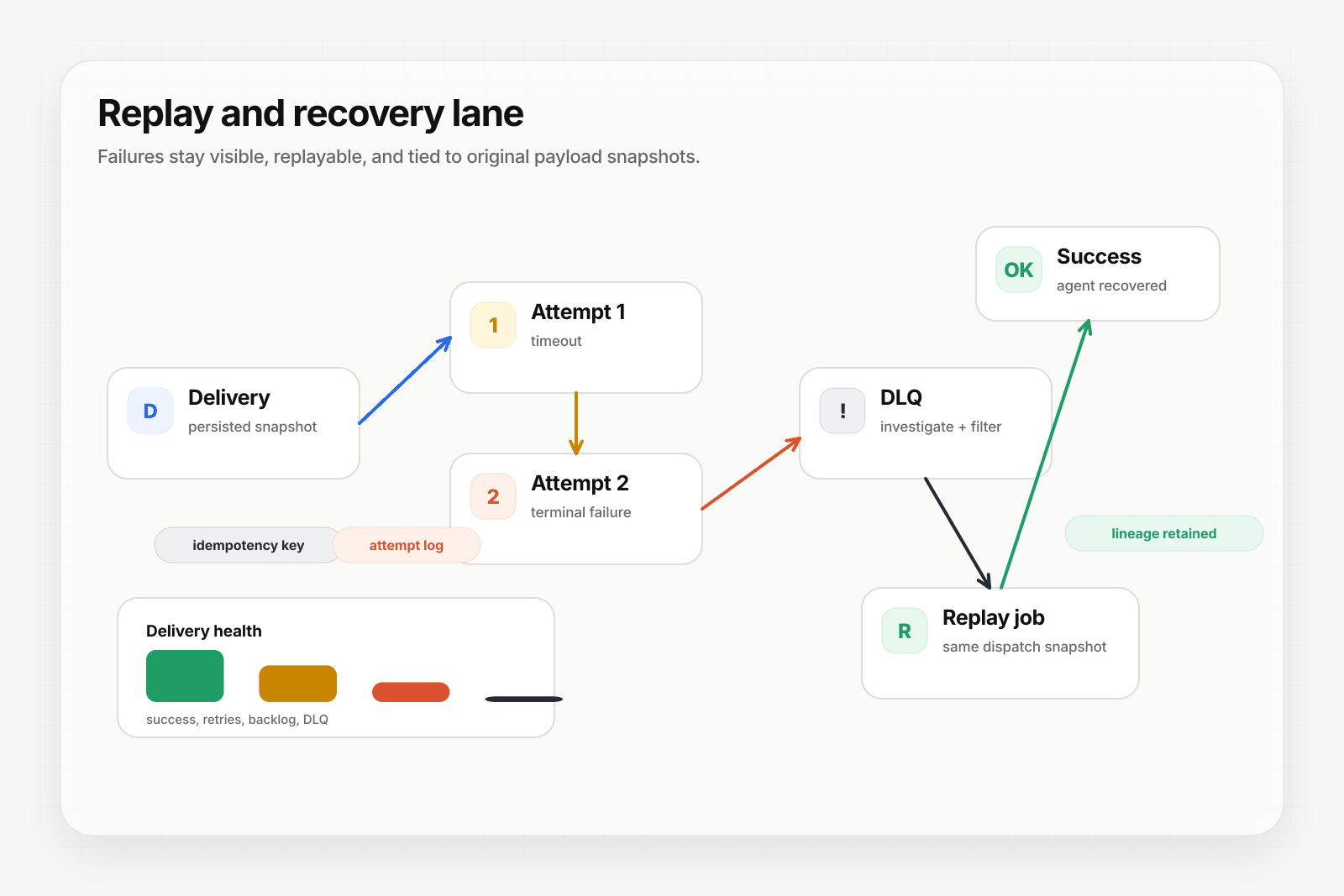
When your agent fails, you need two things: a list of what failed, and a one-click way to replay it with the original input. Both are wired in by default.
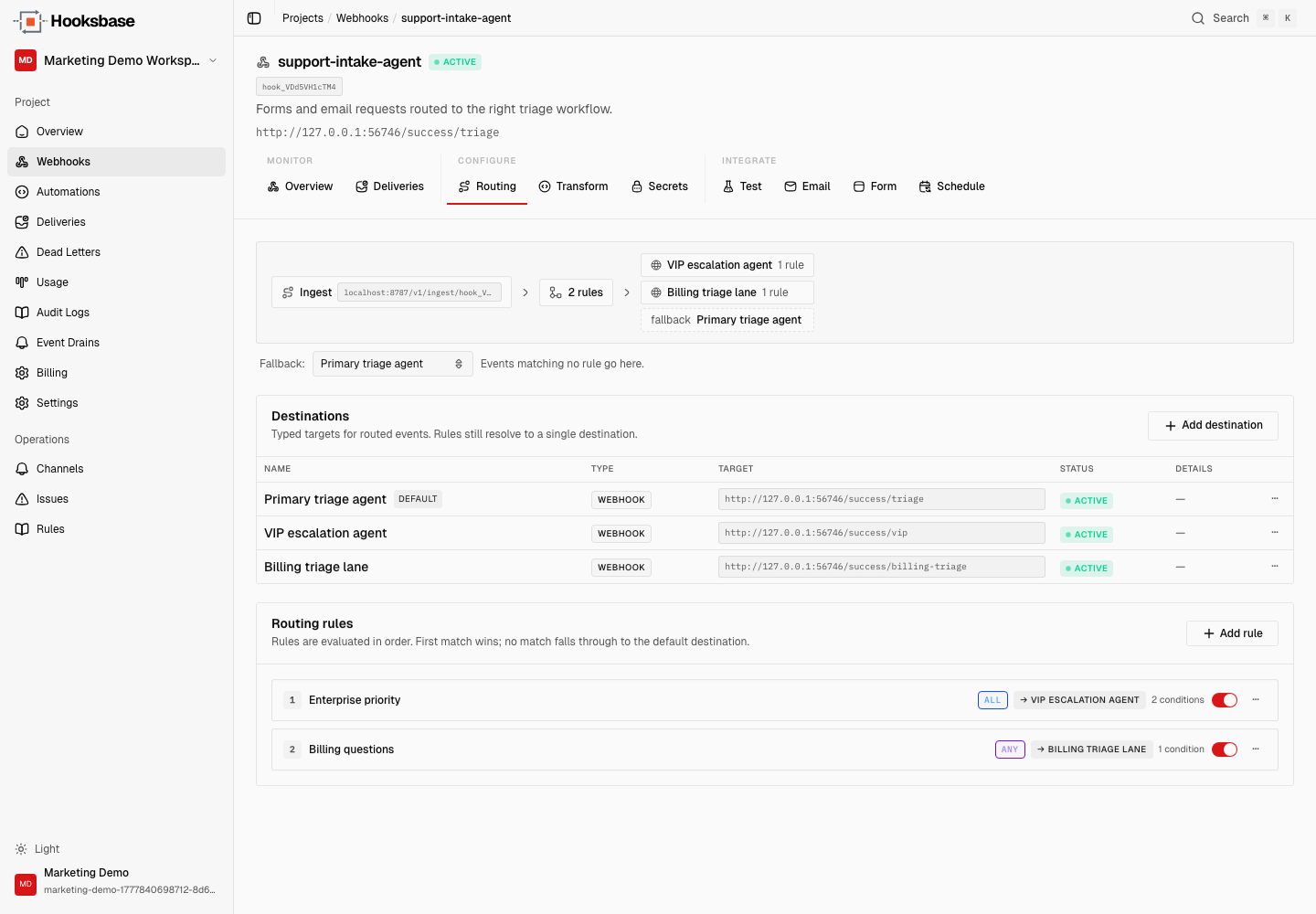
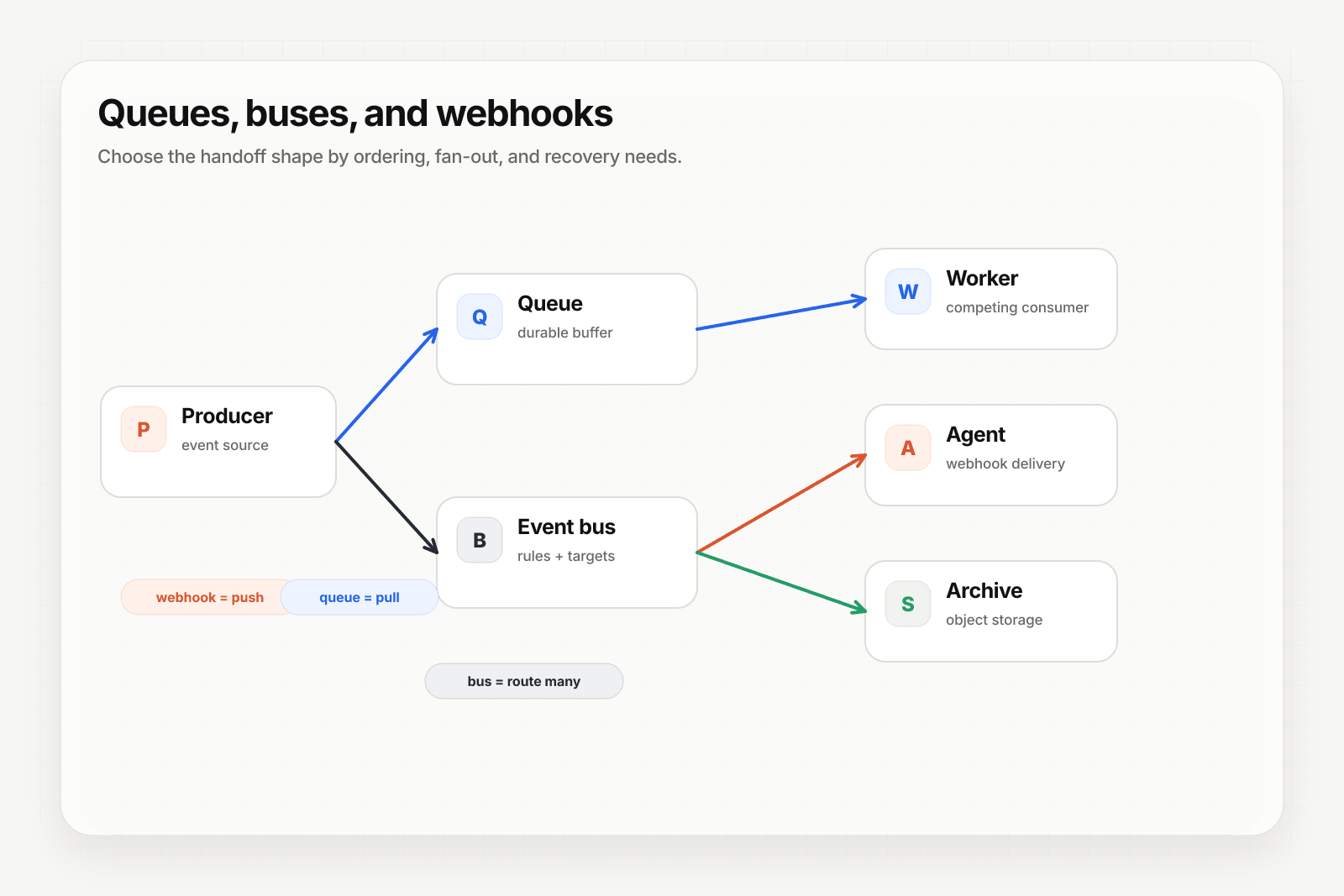
When one webhook feeds multiple agents — or one agent plus an archive — routing rules pick the right destination per event. No middleware required.
Not every agent should wait for a human trigger. Scheduled webhooks fire your agent on a cron cadence with a custom JSON payload — through the same ingest, routing, and delivery pipeline.